2026-11-05 ·
Fire and Water Damage: What Happens After the Fire Trucks Leave
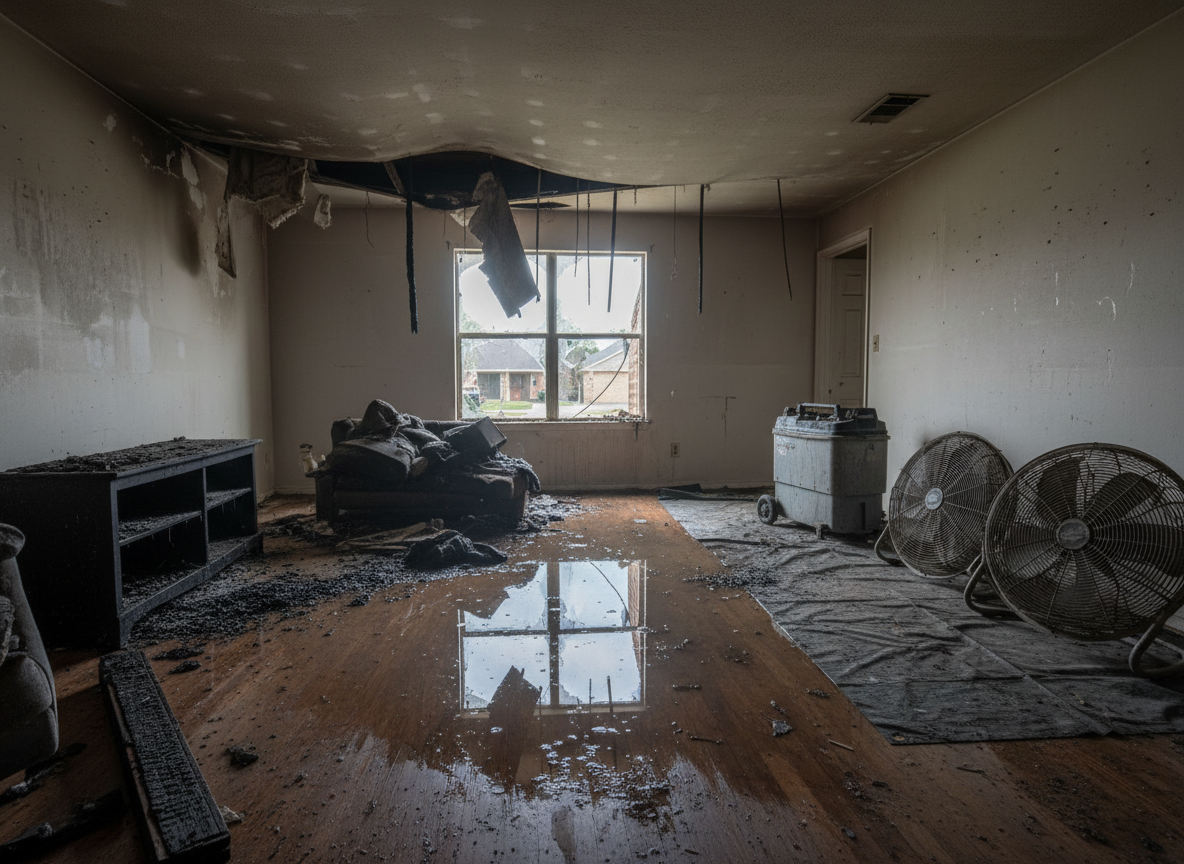
After firefighters leave an Alief property, the water they used to suppress flames becomes the primary threat. In Harris County homes built from the 1970s onward, this water quickly migrates into wall cavities, attic insulation, and hardwood flooring, creating conditions for mold growth within 48 hours when humidity stays above 60 percent. Immediate water removal and targeted drying stop that progression before it reaches neighboring rooms or the slab.
Water Left Behind by Fire Suppression
Fire hoses deliver hundreds of gallons per minute, and much of that volume ends up inside the building envelope rather than on the flames. In single-story Alief ranches common along Bellaire Boulevard and Dairy Ashford Road, water pools above ceilings and travels along joists into bedrooms and closets far from the original burn. Homeowners who wait to begin extraction often discover saturated carpet padding and base plates two or three days later when the odor appears. Professional crews use moisture meters and infrared cameras to locate these pockets before cutting drywall, because visual inspection alone misses water trapped behind vinyl siding or in HVAC ducts. The goal is to remove standing water the same day the fire occurs, then begin drying before the high Houston humidity reintroduces moisture into already wet materials.
Soot, Smoke, and Secondary Moisture Damage
Soot particles left after a fire are acidic and bind to wet surfaces, turning ordinary water damage into corrosive staining on metal fixtures and concrete slabs. In Alief homes with forced-air systems, smoke residue travels through ductwork and settles on moist insulation, requiring separate cleaning before drying equipment can run. When crews skip this step, the residue re-contaminates surfaces during the drying phase. Properties near the Southwest Freeway also face wind-driven smoke that enters through attic vents, adding layers of contamination to already wet fiberglass batts. Addressing both the water and the residue at the same time keeps the job from expanding into full attic mold removal later.
Drying Challenges Specific to Alief Housing Stock
Older Alief construction often features slab-on-grade foundations with limited crawl space access, so water that reaches the slab edge must be managed with perimeter drying rather than simple dehumidification. High local humidity slows evaporation, which means standard drying timelines stretch from five days to eight or nine when outdoor dew points remain elevated. Crews place air movers at low angles to push air across wet subfloors and use desiccant dehumidifiers that perform better than refrigerant units during summer months. Homeowners who attempt to dry these structures with box fans alone usually see mold return within weeks because the moisture never leaves the slab or wall cavities.
Next Steps After Initial Extraction
Once water is removed, the structure needs documentation of moisture levels at multiple depths so that drywall replacement or insulation removal decisions rest on data rather than guesswork. In many Alief cases this leads to selective demolition rather than whole-room gutting, preserving cabinets and trim that stayed dry. Property owners in nearby Braeburn and Meyerland often schedule board-up work immediately after the fire department clears the scene to prevent additional rain intrusion through roof or window damage. For a detailed breakdown of typical restoration pricing in the Houston region, see the article on how much water damage restoration costs in Houston. When the fire damage itself requires temporary securing before water work begins, emergency board up post fire crews coordinate with the water extraction team to keep the site protected.