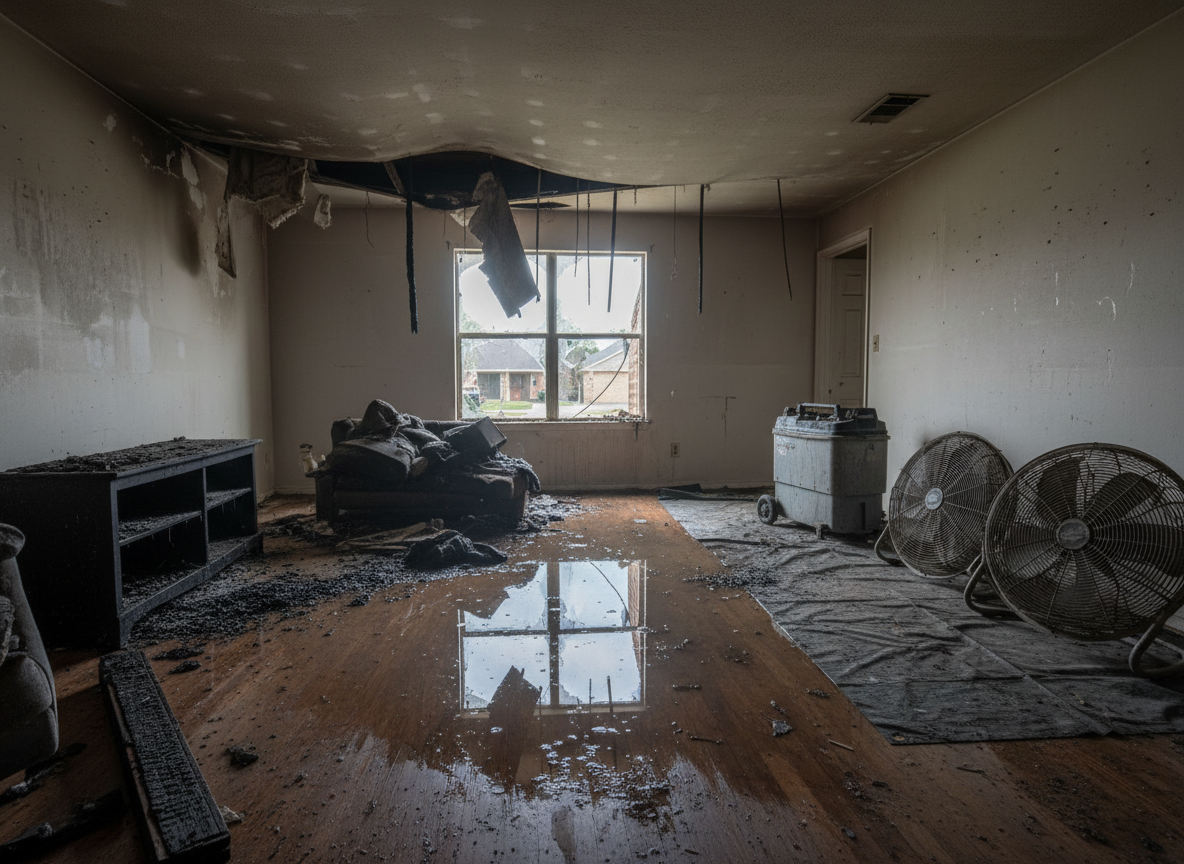
Rosenberg sits along the western edge of the Alief service zone with a mix of 1960s ranch homes and newer subdivisions off FM 2218. When pipes burst or heavy rain backs up into yards, water moves quickly through the area's clay-heavy soil and shallow foundations. Crews reach these streets from Alief within thirty minutes and focus first on extraction before moisture hides in slab edges or wall cavities common to Rosenberg construction.
Access often means working around narrow driveways and older septic lines that still serve many blocks near Avenue H. Local drainage ditches fill fast during spring storms, pushing water under pier-and-beam homes that line the railroad corridor. Restoration here means checking crawl spaces for hidden saturation and drying lumber that stays damp longer than in newer concrete-slab builds farther east.
Around Rosenberg
We regularly work near:
- 📍Rosenberg Railroad Museum
- 📍Jane Long Elementary School
- 📍Fort Bend County Fairgrounds
- 📍Avenue H
- 📍Lamar Consolidated High School
Water Damage Restoration in Rosenberg — Local Notes
- •Clay soils around Rosenberg expand and contract with each rain cycle, opening small foundation cracks that let water travel under slabs faster than in sandy areas closer to central Houston.
- •Many Rosenberg homes built before 1980 still have cast-iron plumbing that corrodes at joints; a single leak can saturate subflooring across multiple rooms before it surfaces.
- •Ditches along FM 2218 and the railroad right-of-way overflow during prolonged rain, sending water into backyards that lack modern grading and forcing extraction equipment onto soft turf.
- •Pier-and-beam houses near the old depot area have low crawl spaces with limited airflow, so drying times stretch when humidity stays high after Gulf storms.